

Exploring the battle between Magento and Shopify in the realm of , this introduction sets the stage for an in-depth comparison of these popular e-commerce platforms. Dive into the world of search engine optimization and discover which platform comes out on top for boosting your online presence.
Introduction
Magento and Shopify are both popular e-commerce platforms that provide businesses with the tools to create and manage online stores. , or Search Engine Optimization, plays a crucial role in helping these stores rank higher in search engine results, ultimately driving more organic traffic and potential customers to the website.
Choosing the right platform for is essential as it can impact the visibility and success of an online store in a competitive digital landscape.
Technical Capabilities
When it comes to technical features, both Magento and Shopify offer various tools and options to help improve a website's search engine optimization. Let's compare how each platform handles key aspects like meta tags, canonical tags, sitemaps, URL structure, and customization options for .
Meta Tags
Meta tags play a crucial role in telling search engines what a webpage is about. Both Magento and Shopify allow users to customize meta titles and descriptions for each page, helping to improve visibility in search results.
Canonical Tags
Canonical tags are important for avoiding duplicate content issues. Magento and Shopify both support canonical tags, allowing website owners to indicate the preferred version of a page to search engines.
Sitemaps
Sitemaps help search engines crawl and index website pages more efficiently. Both Magento and Shopify generate XML sitemaps automatically, making it easier for search engines to discover and rank content.
URL Structure and Customization
Magento offers more flexibility in URL customization compared to Shopify. With Magento, users can create -friendly URLs with relevant s, while Shopify's URL structure is more standardized. This customization option in Magento can provide an extra edge in optimizing for specific s.Overall, both Magento and Shopify offer solid technical capabilities, but Magento may have a slight advantage in terms of URL customization for purposes.
Content Management and
When it comes to optimizing content for search engines, both Magento and Shopify offer tools and features to help improve performance. Let's explore how these platforms support content creation and optimization for better search engine visibility.
Content Creation and Optimization
- Magento: Magento provides a robust content management system that allows users to create and publish a variety of content types, including blog posts, product descriptions, and landing pages. Users can optimize content for by customizing meta tags, URLs, and image alt text.
Additionally, Magento offers built-in features such as XML sitemaps, canonical tags, and schema markup to improve search engine rankings.
- Shopify: Shopify's content management system is user-friendly and intuitive, making it easy for users to create and edit content without technical expertise. Users can optimize content for by customizing meta titles, descriptions, and URLs. Shopify also offers apps and plugins, such as Manager and Plug in , to help users analyze and improve their website's performance.
Performance and Site Speed
When it comes to , performance and site speed play a crucial role in determining search engine rankings and user experience. Let's dive into how Magento and Shopify compare in terms of these factors.
Magento vs. Shopify: Loading Times and Caching Mechanisms
- Magento: Known for its flexibility and robust features, Magento can be more complex and resource-intensive, leading to potentially slower loading times compared to Shopify.
- Shopify: On the other hand, Shopify is designed to be user-friendly and optimized for speed, offering faster loading times out of the box.
- Caching Mechanisms: Both platforms offer caching mechanisms to improve site speed. Magento has full-page caching capabilities, while Shopify has built-in CDN support for faster content delivery.
Impact of Performance on Rankings and User Experience
- Rankings: Search engines like Google consider site speed as a ranking factor. A faster-loading website is likely to rank higher in search results, giving an edge to Shopify in this aspect.
- User Experience: Slow loading times can lead to higher bounce rates and lower user engagement. Shopify's faster performance can result in better user experience, ultimately impacting positively.
Mobile Friendliness
In today's digital age, where mobile devices are becoming increasingly prevalent, ensuring mobile friendliness is crucial for any e-commerce website. This section will explore how Magento and Shopify cater to mobile responsiveness and its impact on rankings.
Mobile Responsiveness of Magento and Shopify
When it comes to mobile responsiveness, both Magento and Shopify offer responsive themes that adapt to different screen sizes. However, Shopify is known for its user-friendly interface and seamless mobile experience, making it a preferred choice for mobile optimization.
Influence of Mobile-Friendliness on Rankings
Mobile-friendliness plays a significant role in rankings, especially after Google's mobile-first indexing update. Websites that are mobile-friendly tend to rank higher in search results, as they provide a better user experience for mobile users. Therefore, optimizing your e-commerce site for mobile is essential to improve visibility and organic traffic.
Optimizing E-commerce Sites for Mobile
To optimize your e-commerce site for mobile , consider implementing the following features or best practices:
- Responsive Design: Ensure your website is responsive and adapts to various screen sizes for a seamless user experience.
- Mobile-Friendly Content: Create concise, engaging content that is easy to read on mobile devices.
- Page Speed: Optimize your site's loading speed for mobile users to reduce bounce rates and improve rankings.
- Mobile-Friendly Navigation: Simplify navigation and make it easy for users to find products and information on mobile devices.
- Optimized Images: Compress images and use responsive images to enhance loading times on mobile devices.
E-commerce Strategies
When it comes to e-commerce strategies, both Magento and Shopify offer various tools and features to help businesses improve their online visibility and drive traffic to their stores. Let's explore some effective strategies for each platform.
Magento Tactics
- Optimizing product pages with relevant s and meta tags
- Creating -friendly URLs for better search engine visibility
- Implementing rich snippets to enhance search results appearance
Shopify Tactics
- Utilizing Shopify's built-in features like customizable title tags and meta descriptions
- Generating XML sitemaps to help search engines crawl and index the website effectively
- Leveraging Shopify apps for advanced functionalities such as image optimization and link building
Successful Campaigns
When it comes to successful campaigns, both Magento and Shopify have seen businesses achieve remarkable results through strategic optimization efforts.
One successful campaign on Magento involved implementing a comprehensive strategy, optimizing site structure, and creating high-quality content to attract organic traffic and improve search rankings.
On the other hand, a Shopify store saw significant growth in organic search traffic by focusing on mobile optimization, improving site speed, and regularly updating product descriptions with targeted s.
User Experience and
User experience design plays a crucial role in performance for both Magento and Shopify. A well-designed and user-friendly interface can positively impact search engine rankings by enhancing website usability and engagement.
Impact of User Experience Design on
User experience design directly affects how visitors interact with a website, which in turn influences rankings. A seamless navigation structure, intuitive layout, and clear call-to-action buttons can improve user engagement and reduce bounce rates, signaling search engines that the site provides valuable content.
- Optimizing page load times and reducing friction points in the user journey can lead to higher conversion rates and increased organic traffic.
- Mobile responsiveness and cross-browser compatibility are essential for a positive user experience, contributing to better rankings on both Magento and Shopify platforms.
Role of User-Friendly Interfaces in Rankings
Search engines like Google prioritize websites that offer a positive user experience, as reflected in lower bounce rates and longer dwell times. User-friendly interfaces that prioritize accessibility, readability, and visual appeal can enhance performance by keeping visitors engaged and encouraging them to explore more pages.
- Clear and concise navigation menus, prominent search functionalities, and strategic placement of important content can improve user satisfaction and lead to higher search engine visibility.
- Integrating interactive elements, such as videos, animations, and infographics, can enrich the user experience and increase dwell time, signaling search engines that the site offers valuable and engaging content.
Common UX Pitfalls That Affect Performance
Despite the importance of user experience in , certain pitfalls can negatively impact a website's search engine rankings. Identifying and addressing these common UX issues is crucial for maintaining a strong online presence and maximizing organic traffic.
- Complex navigation structures, slow page load times, and intrusive pop-ups can deter users from exploring the site further, leading to higher bounce rates and decreased performance.
- Poorly optimized mobile experiences, cluttered layouts, and confusing information architecture can hinder user engagement and diminish the site's visibility in search results.
Last Word
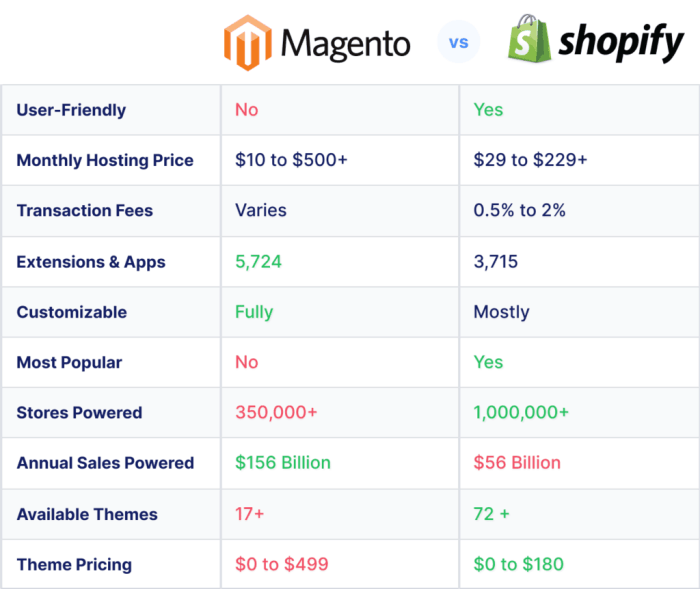
In conclusion, the discussion around Magento vs. Shopify: Which Platform Has Better ? sheds light on the key factors to consider when optimizing your e-commerce website. Whether you're leaning towards Magento or Shopify, understanding their capabilities is crucial for achieving success in the competitive online marketplace.
FAQ Insights
Which platform is more suited for beginners in terms of - Magento or Shopify?
Shopify is often considered more beginner-friendly for due to its user-friendly interface and built-in features.
Can Magento and Shopify plugins help improve ?
Yes, both platforms offer a variety of plugins that can enhance efforts by providing additional optimization tools and features.
Do Magento and Shopify offer support for structured data and rich snippets?
Yes, both platforms support structured data and rich snippets, which can help improve search engine visibility and click-through rates.
What are the key differences in performance between Magento and Shopify?
Magento is known for its robust capabilities and customization options, while Shopify excels in user-friendliness and simplicity for optimization.
How important is site speed in relation to for Magento and Shopify?
Site speed plays a crucial role in rankings for both platforms, as faster-loading websites tend to rank higher in search engine results.

