

Diving into the realm of Ecommerce Marketing Trends in 2025, this introduction aims to captivate readers with a glimpse into the future of digital commerce. As businesses navigate the ever-changing landscape of online marketing, staying informed about the latest trends is crucial for success.
In this overview, we will delve into key areas of focus that are reshaping marketing strategies and revolutionizing the way businesses engage with consumers.
Overview of Ecommerce Marketing Trends in 2025
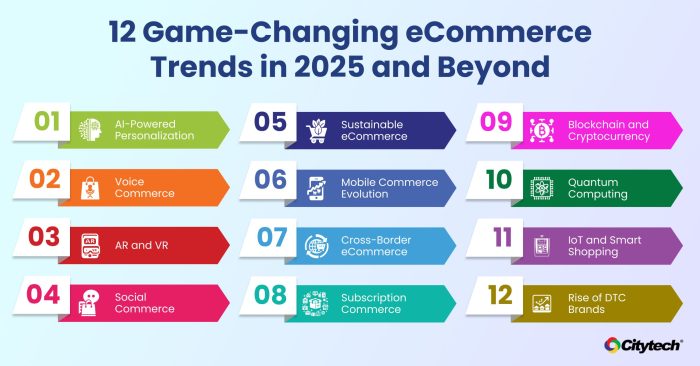
In 2025, the landscape of ecommerce marketing is expected to see significant shifts and innovations. Businesses will need to adapt to stay relevant and competitive in this fast-paced environment.
Personalization and Customer Experience
One of the key areas of focus in ecommerce marketing in 2025 will be personalization and enhancing the overall customer experience. Tailoring marketing strategies to individual preferences and needs will be essential for driving engagement and loyalty.
AI and Automation
Artificial Intelligence (AI) and automation will continue to play a crucial role in ecommerce marketing strategies. From chatbots to personalized recommendations, businesses will leverage AI to streamline processes and deliver more targeted campaigns.
Voice Commerce
The rise of voice assistants and smart speakers will also reshape ecommerce marketing in 2025. Optimizing content for voice search and enabling voice-enabled shopping experiences will be a priority for businesses looking to reach a wider audience.
Social Commerce
Social media platforms will further integrate ecommerce capabilities, blurring the lines between social networking and online shopping. Businesses will need to harness the power of social commerce to drive sales and build brand awareness.
Personalized Customer Experiences
Personalized customer experiences play a crucial role in ecommerce marketing by creating a unique and tailored interaction for each customer. This approach allows businesses to connect with their target audience on a deeper level, increasing customer satisfaction, loyalty, and ultimately driving sales.
Significance of Personalized Customer Experiences
Personalized customer experiences are essential in today's competitive ecommerce landscape as they help businesses stand out from the crowd. By understanding the preferences, behaviors, and needs of individual customers, companies can deliver targeted marketing messages, product recommendations, and offers, resulting in higher conversion rates and customer retention.
Examples of Successful Implementation
- Amazon: Amazon uses personalized product recommendations based on customers' browsing history and purchase behavior to enhance the shopping experience and drive repeat purchases.
- Netflix: Netflix leverages AI algorithms to recommend movies and TV shows based on users' viewing history, ratings, and preferences, leading to increased engagement and customer satisfaction.
AI and Machine Learning Technologies
AI and machine learning technologies are revolutionizing personalized customer experiences in ecommerce marketing. These technologies analyze vast amounts of data in real-time to predict customer behavior, preferences, and future needs. By leveraging AI, businesses can automate personalized product recommendations, tailor marketing campaigns, and provide proactive customer service, resulting in a seamless and customized shopping experience for each individual.
Augmented Reality (AR) and Virtual Reality (VR) Integration
Augmented Reality (AR) and Virtual Reality (VR) are revolutionizing the ecommerce shopping experience by offering immersive and interactive ways for customers to engage with products online. These technologies enable users to visualize products in a realistic way before making a purchase, bridging the gap between online and in-store shopping experiences.
Benefits of AR and VR Integration in Ecommerce Marketing
- Enhanced Customer Engagement: AR and VR allow customers to interact with products virtually, leading to increased engagement and a sense of connection with the brand.
- Improved Shopping Experience: By providing a more immersive shopping experience, AR and VR technologies help customers make informed purchasing decisions.
- Reduced Return Rates: AR and VR integration can help reduce return rates by enabling customers to visualize products accurately before buying.
Brands Utilizing AR/VR to Drive Sales
- IKEA:The furniture retailer offers an AR app that allows customers to preview how furniture will look in their homes before buying.
- Sephora:The beauty brand utilizes AR to enable customers to try on virtual makeup and skincare products through their app.
- Warby Parker:The eyewear company offers a virtual try-on feature using AR technology, making it easier for customers to find the perfect pair of glasses online.
Sustainability and Ethical Practices
As we move towards 2025, the focus on sustainability and ethical practices in ecommerce marketing is becoming increasingly important. Consumers are more conscious of the impact of their purchases on the environment and society, leading businesses to reevaluate their strategies.
Incorporating Sustainability into Marketing Strategies
Businesses can incorporate sustainability into their marketing strategies by emphasizing eco-friendly practices, promoting products with recyclable packaging, reducing carbon footprint in logistics, and supporting ethical sourcing of materials.
Consumer Preferences for Eco-Friendly Products
- Consumers are showing a growing preference for eco-friendly products and brands that prioritize sustainability.
- Studies have shown that a significant percentage of consumers are willing to pay a premium for products that are environmentally friendly.
- Eco-conscious consumers are more likely to support brands that are transparent about their sustainability efforts and ethical practices.
Voice Commerce and Conversational AI
Voice commerce and conversational AI are reshaping the way consumers interact with online stores and make purchases. As more people embrace smart speakers and virtual assistants in their daily lives, businesses are leveraging this trend to enhance the shopping experience and drive sales.
Impact of Voice Commerce and Conversational AI on Ecommerce Sales
- Voice commerce enables hands-free shopping, making it more convenient for customers to place orders and make transactions.
- Conversational AI allows businesses to provide personalized recommendations and assistance to customers, leading to increased sales and customer satisfaction.
- Studies show that voice commerce can lead to higher average order values and increased customer loyalty due to the seamless shopping experience.
Challenges and Opportunities of Implementing Voice Commerce
- One challenge is ensuring the accuracy of voice recognition technology to accurately understand and process customer requests.
- Businesses need to invest in developing voice commerce capabilities and integrating them seamlessly into their existing ecommerce platforms.
- Opportunities include reaching a wider audience, especially those who prefer voice search and shopping, and gaining a competitive edge in the market.
Businesses Leveraging Voice Assistants and Conversational AI
- Amazon's Alexa and Google Assistant are popular voice assistants used by businesses to provide customer support, recommend products, and facilitate purchases.
- Retailers like Walmart and Best Buy have integrated voice commerce into their mobile apps to enable customers to shop using voice commands.
- Clothing brands like H&M and Burberry have used conversational AI to create virtual stylists that offer personalized fashion advice to customers.
Closure
In conclusion, the landscape of ecommerce marketing is evolving at a rapid pace, with trends like personalized customer experiences, AR/VR integration, sustainability practices, voice commerce, and conversational AI leading the way. By embracing these trends and staying ahead of the curve, businesses can position themselves for success in 2025 and beyond.
Popular Questions
How important is it to stay updated with the latest ecommerce marketing trends in 2025?
Staying updated with the latest trends is crucial as it allows businesses to adapt their marketing strategies to meet evolving consumer expectations and stay ahead of the competition.
What role do AI and machine learning technologies play in enhancing personalized customer experiences?
AI and machine learning technologies enable businesses to analyze customer data and behavior to provide tailored recommendations and personalized interactions, ultimately enhancing the overall customer experience.
How can businesses incorporate sustainability into their ecommerce marketing strategies?
Businesses can incorporate sustainability into their marketing strategies by promoting eco-friendly products, adopting ethical practices, and communicating their commitment to sustainability to consumers.
What are some challenges associated with implementing voice commerce in ecommerce?
Challenges with voice commerce implementation include ensuring accurate voice recognition, maintaining security and privacy measures, and creating seamless user experiences that integrate voice technology effectively.

